
이 글은 아두이노를 이용한 세그웨이 기반 줄다리기 로봇 제작의 과정에 대해서 세부적인 글입니다.
> 글을 작성하기에 앞서 이 줄다리기 로봇의 이름을 줄줄이라고 부르도록 하고자 한다.
이때 사용된 파일은 다음 깃헙 링크에 저장하였다.
https://github.com/MOSW626/Tug_of_War_Robot_Project_-2022-.git
GitHub - MOSW626/Tug_of_War_Robot_Project_-2022-
Contribute to MOSW626/Tug_of_War_Robot_Project_-2022- development by creating an account on GitHub.
github.com
- 줄줄이 1호
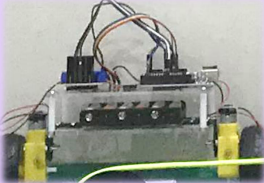
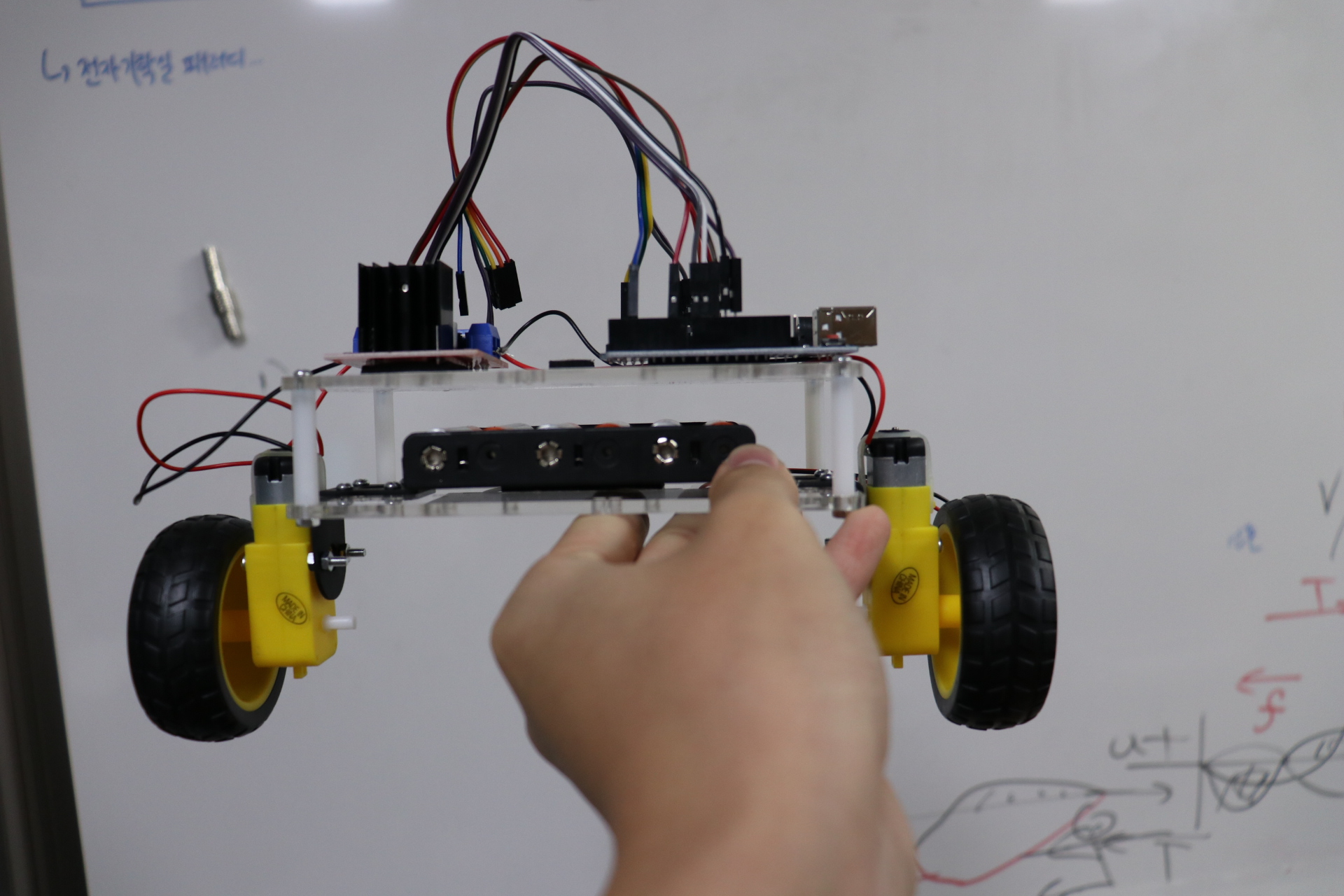
> MPU6050 다루기(22.05.23.)
가장 먼저 github이나 유튜브에서 이미 진행한 셀프 밸런싱 관련 코드를 따서 다음과 같이 진행해 보았다.
// 아두이노 밸런싱로봇 프로그램 (참조 및 출처 : circuitdigest.com)

#include "I2Cdev.h"
#include <PID_v1.h>
#include "MPU6050_6Axis_MotionApps20.h"
MPU6050 mpu;

// MPU control/status vars
bool dmpReady = false;  // set true if DMP init was successful
uint8_t mpuIntStatus;   // holds actual interrupt status byte from MPU
uint8_t devStatus;      // return status after each device operation (0 = success, !0 = error)
uint16_t packetSize;    // expected DMP packet size (default is 42 bytes)
uint16_t fifoCount;     // count of all bytes currently in FIFO
uint8_t fifoBuffer[64]; // FIFO storage buffer

// orientation/motion vars
Quaternion q;           // [w, x, y, z]         quaternion container
VectorFloat gravity;    // [x, y, z]            gravity vector
float ypr[3];           // [yaw, pitch, roll]   yaw/pitch/roll container and gravity vector


// 아래의 4개의 값을 본인의 로봇에 맞게 튜닝합니다.
/*********파라메터 튜닝 시작*********/
double setpoint= 220; //로봇이 지면에서 평형을 유지하는 상태의 값입니다.
//다음은 PID 제어기의 Kp, Ki, Kd 파라메타를 설정합니다. 아래의 순서대로 설정합니다.
double Kp = 21;
double Kd = 0.8;
double Ki = 10;
/******파라메터 튜닝 끝*********/

double input, output;
PID pid(&input, &output, &setpoint, Kp, Ki, Kd, DIRECT);


volatile bool mpuInterrupt = false;     // MPU6050의 인터럽트 발생유무 확인
void dmpDataReady()
{
    mpuInterrupt = true;
}

void setup() {
  Serial.begin(115200);

    // MPU6050 초기화
    Serial.println(F("Initializing I2C devices..."));
    mpu.initialize();

    // MPU6050 통신확인
    Serial.println(F("Testing device connections..."));
    Serial.println(mpu.testConnection() ? F("MPU6050 connection successful") : F("MPU6050 connection failed"));

    // DMP 초기화
    devStatus = mpu.dmpInitialize();


    // 기본 옵셋값 설정
    mpu.setXGyroOffset(220);  // 수평일때의 기본 x축 자이로값
    mpu.setYGyroOffset(76);
    mpu.setZGyroOffset(-85);
    mpu.setZAccelOffset(1688);

    // 정상동작하는 경우
    if (devStatus == 0)
    {
        // DMP 가동
        Serial.println(F("Enabling DMP..."));
        mpu.setDMPEnabled(true);

        // 아두이노 인터럽트 설정
        Serial.println(F("Enabling interrupt detection (Arduino external interrupt 0)..."));
        attachInterrupt(0, dmpDataReady, RISING);
        mpuIntStatus = mpu.getIntStatus();

        // DMP 사용가능 상태 설정
        Serial.println(F("DMP ready! Waiting for first interrupt..."));
        dmpReady = true;

        // 패킷사이즈 가져오기
        packetSize = mpu.dmpGetFIFOPacketSize();

        //PID 설정
        pid.SetMode(AUTOMATIC);
        pid.SetSampleTime(10);
        pid.SetOutputLimits(-255, 255);
    }
    else
    {
        // 오류시
        // 1 = 초기 메모리 에러
        // 2 = DMP 설정 오류
        Serial.print(F("DMP Initialization failed (code "));
        Serial.print(devStatus);
        Serial.println(F(")"));
    }

    //모터 출력핀 초기화
    pinMode (6, OUTPUT);
    pinMode (9, OUTPUT);
    pinMode (10, OUTPUT);
    pinMode (11, OUTPUT);

   //모터 동작 OFF
    analogWrite(6,LOW);
    analogWrite(9,LOW);
    analogWrite(10,LOW);
    analogWrite(11,LOW);
}


void loop() {

    // 오류시 작업중지
    if (!dmpReady) return;

    // MPU 인터럽트나 패킷 대기
    while (!mpuInterrupt && fifoCount < packetSize)
    {
        //MPU6050 데이터가 없는 경우 PID 계산
        pid.Compute();

        //시리얼 모니터로 현재 상태 출력
        Serial.print(input); Serial.print(" =>"); Serial.println(output);

        if (input>150 && input<250){//로봇이 기울어지는 경우(각도 범위내에서만)

        if (output>0) //앞으로 기울어지는 경우
        Forward(); //전진
        else if (output<0) //뒤로 기울어지는 경우
        Reverse(); //후진
        }
        else //로봇이 기울어지지 않은 경우
        Stop(); //모터 정지

    }

    // reset interrupt flag and get INT_STATUS byte
    mpuInterrupt = false;
    mpuIntStatus = mpu.getIntStatus();

    // get current FIFO count
    fifoCount = mpu.getFIFOCount();

    // check for overflow (this should never happen unless our code is too inefficient)
    if ((mpuIntStatus & 0x10) || fifoCount == 1024)
    {
        // reset so we can continue cleanly
        mpu.resetFIFO();
        Serial.println(F("FIFO overflow!"));

    // otherwise, check for DMP data ready interrupt (this should happen frequently)
    }
    else if (mpuIntStatus & 0x02)
    {
        // wait for correct available data length, should be a VERY short wait
        while (fifoCount < packetSize) fifoCount = mpu.getFIFOCount();

        // read a packet from FIFO
        mpu.getFIFOBytes(fifoBuffer, packetSize);

        // track FIFO count here in case there is > 1 packet available
        // (this lets us immediately read more without waiting for an interrupt)
        fifoCount -= packetSize;

        mpu.dmpGetQuaternion(&q, fifoBuffer); //get value for q
        mpu.dmpGetGravity(&gravity, &q); //get value for gravity
        mpu.dmpGetYawPitchRoll(ypr, &q, &gravity); //get value for ypr

        input = ypr[1] * 180/M_PI + 180;

   }
}

void Forward() //전진
{
    analogWrite(6,output);
    analogWrite(9,0);
    analogWrite(10,output);
    analogWrite(11,0);
    Serial.print("F");
}

void Reverse() //후진
{
    analogWrite(6,0);
    analogWrite(9,output*-1);
    analogWrite(10,0);
    analogWrite(11,output*-1);
    Serial.print("R");
}

void Stop() //정지
{
    analogWrite(6,0);
    analogWrite(9,0);
    analogWrite(10,0);
    analogWrite(11,0);
    Serial.print("S");
}이 과정에서 로봇의 imu에서의 값을 이해하지 못해 센서만을 뜯어보고자 하였다.
> MPU6050 다루기(22.06.01.)
mpu6050의 값을 얻어보기 위해서 사용해 본 코드이다.
#include<Wire.h>

const int MPU=0x68;  //MPU 6050 의 I2C 기본 주소
int16_t AcX,AcY,AcZ,Tmp,GyX,GyY,GyZ;

void setup(){
  Wire.begin();      //Wire 라이브러리 초기화
  Wire.beginTransmission(MPU); //MPU로 데이터 전송 시작
  Wire.write(0x6B);  // PWR_MGMT_1 register
  Wire.write(0);     //MPU-6050 시작 모드로
  Wire.endTransmission(true);
  Serial.begin(115200);
  Serial.println("CLEARDATA");
  Serial.println("LABEL, AcZ, GyX, GyY");
}

void loop(){
  Wire.beginTransmission(MPU);    //데이터 전송시작
  Wire.write(0x3B);               // register 0x3B (ACCEL_XOUT_H), 큐에 데이터 기록
  Wire.endTransmission(false);    //연결유지
  Wire.requestFrom(MPU,14,true);  //MPU에 데이터 요청
  //데이터 한 바이트 씩 읽어서 반환
  AcX=Wire.read()<<8|Wire.read();
  AcY=Wire.read()<<8|Wire.read();
  AcZ=Wire.read()<<8|Wire.read();
  Tmp=Wire.read()<<8|Wire.read();
  GyX=Wire.read()<<8|Wire.read();
  GyY=Wire.read()<<8|Wire.read();
  GyZ=Wire.read()<<8|Wire.read();

  //시리얼 모니터에 출력
  Serial.print("DATA,");
  Serial.print(AcZ);
  Serial.print(",");
  Serial.print(GyX);
  Serial.print(",");
  Serial.print(GyY);
  Serial.println();
  delay(333);
}
그리고 이 값들이 주로 쓰인다는 것을 알고 있었지만, 그전에 모든 데이터를 받아보던 코드이다.
#include<Wire.h>

const int MPU=0x68;  //MPU 6050 의 I2C 기본 주소
int16_t AcX,AcY,AcZ,Tmp,GyX,GyY,GyZ;

void setup(){
  Wire.begin();      //Wire 라이브러리 초기화
  Wire.beginTransmission(MPU); //MPU로 데이터 전송 시작
  Wire.write(0x6B);  // PWR_MGMT_1 register
  Wire.write(0);     //MPU-6050 시작 모드로
  Wire.endTransmission(true);
  Serial.begin(9600);
  Serial.println("CLEARDATA");
  Serial.println("LABEL,AcX, AcY, AcZ, Tmp, GyX, GyY, GyZ");
}

void loop(){
  Wire.beginTransmission(MPU);    //데이터 전송시작
  Wire.write(0x3B);               // register 0x3B (ACCEL_XOUT_H), 큐에 데이터 기록
  Wire.endTransmission(false);    //연결유지
  Wire.requestFrom(MPU,14,true);  //MPU에 데이터 요청
  //데이터 한 바이트 씩 읽어서 반환
  AcX=Wire.read()<<8|Wire.read();  // 0x3B (ACCEL_XOUT_H) & 0x3C (ACCEL_XOUT_L)
  AcY=Wire.read()<<8|Wire.read();  // 0x3D (ACCEL_YOUT_H) & 0x3E (ACCEL_YOUT_L)
  AcZ=Wire.read()<<8|Wire.read();  // 0x3F (ACCEL_ZOUT_H) & 0x40 (ACCEL_ZOUT_L)
  Tmp=Wire.read()<<8|Wire.read();  // 0x41 (TEMP_OUT_H) & 0x42 (TEMP_OUT_L)
  GyX=Wire.read()<<8|Wire.read();  // 0x43 (GYRO_XOUT_H) & 0x44 (GYRO_XOUT_L)
  GyY=Wire.read()<<8|Wire.read();  // 0x45 (GYRO_YOUT_H) & 0x46 (GYRO_YOUT_L)
  GyZ=Wire.read()<<8|Wire.read();  // 0x47 (GYRO_ZOUT_H) & 0x48 (GYRO_ZOUT_L)

  //시리얼 모니터에 출력
  Serial.print("DATA,");
  Serial.print(AcX);
  Serial.print(",");
  Serial.print(AcY);
  Serial.print(",");
  Serial.print(AcZ);
  Serial.print(",");
  Serial.print(Tmp/340.00+36.53);
  Serial.print(",");
  Serial.print(GyX);
  Serial.print(",");
  Serial.print(GyY);
  Serial.print(",");
  Serial.println(GyZ);
  delay(333);
}값을 받아보니, 데이터가 매우 들쑥날쑥하여 칼만필터를 공부하기 시작했다.
> 칼만필터의 이해(22.06.02.)
/* Copyright (C) 2012 Kristian Lauszus, TKJ Electronics. All rights reserved. This software may be distributed and modified under the terms of the GNU General Public License version 2 (GPL2) as published by the Free Software Foundation and appearing in the file GPL2.TXT included in the packaging of this file. Please note that GPL2 Section 2[b] requires that all works based on this software must also be made publicly available under the terms of the GPL2 ("Copyleft").

 Contact information
 -------------------

Kristian Lauszus, TKJ Electronics
 Web      :  http://www.tkjelectronics.com
e-mail   :  kristianl@tkjelectronics.com
*/

#include <Wire.h>
#include <Kalman.h>
// Source: https://github.com/TKJElectronics/KalmanFilter

#define RESTRICT_PITCH
// Comment out to restrict roll to ±90deg instead - please read:http://www.freescale.com/files/sensors/doc/app_note/AN3461.pdfKalman

 kalmanX; // Create the Kalman instancesKalman
 kalmanY;
/* IMU Data */
double accX, accY, accZ;double gyroX, gyroY, gyroZ;int16_t tempRaw;

double gyroXangle, gyroYangle; // Angle calculate using the gyro only
double compAngleX, compAngleY; // Calculated angle using a complementary filter
double kalAngleX, kalAngleY; // Calculated angle using a Kalman filter

uint32_t timer;
uint8_t i2cData[14]; // Buffer for I2C data

// TODO: Make calibration routine

void setup() {
  Serial.begin(115200);  Wire.begin();
#if  ARDUINO >= 157
  Wire.setClock(400000UL); // Set I2C frequency to 400kHz
#else
  TWBR = ((F_CPU / 400000UL) - 16) / 2; // Set I2C frequency to 400kHz
#endif
  i2cData[0] = 7; // Set the sample rate to 1000Hz - 8kHz/(7+1) = 1000Hz
  i2cData[1] = 0x00; // Disable FSYNC and set 260 Hz Acc filtering, 256 Hz Gyro filtering, 8 KHz sampling
  i2cData[2] = 0x00; // Set Gyro Full Scale Range to ±250deg/s
  i2cData[3] = 0x00; // Set Accelerometer Full Scale Range to ±2g
  while (i2cWrite(0x19, i2cData, 4, false)); // Write to all four registers at once
  while (i2cWrite(0x6B, 0x01, true)); // PLL with X axis gyroscope reference and disable sleep mode

  while (i2cRead(0x75, i2cData, 1));  if (i2cData[0] != 0x68) { // Read "WHO_AM_I" register
    Serial.print(F("Error reading sensor"));    while (1);  }

  delay(100); // Wait for sensor to stabilize

  /* Set kalman and gyro starting angle */
  while (i2cRead(0x3B, i2cData, 6));  accX = (i2cData[0] << 8) | i2cData[1];  accY = (i2cData[2] << 8) | i2cData[3];  accZ = (i2cData[4] << 8) | i2cData[5];
  // Source: http://www.freescale.com/files/sensors/doc/app_note/AN3461.pdf eq. 25 and eq. 26
 // atan2 outputs the value of -π to π (radians) - see http://en.wikipedia.org/wiki/Atan2
 // It is then converted from radians to degrees
#ifdef RESTRICT_PITCH
 // Eq. 25 and 26
  double roll  = atan2(accY, accZ) * RAD_TO_DEG;  double pitch = atan(-accX / sqrt(accY * accY + accZ * accZ)) * RAD_TO_DEG;
#else
 // Eq. 28 and 29
  double roll  = atan(accY / sqrt(accX * accX + accZ * accZ)) * RAD_TO_DEG;  double pitch = atan2(-accX, accZ) * RAD_TO_DEG;
#endif

  kalmanX.setAngle(roll); // Set starting angle
  kalmanY.setAngle(pitch);  gyroXangle = roll;  gyroYangle = pitch;  compAngleX = roll;  compAngleY = pitch;
  timer = micros();}

void loop() {
  /* Update all the values */
  while (i2cRead(0x3B, i2cData, 14));  accX = ((i2cData[0] << 8) | i2cData[1]);  accY = ((i2cData[2] << 8) | i2cData[3]);  accZ = ((i2cData[4] << 8) | i2cData[5]);  tempRaw = (i2cData[6] << 8) | i2cData[7];  gyroX = (i2cData[8] << 8) | i2cData[9];  gyroY = (i2cData[10] << 8) | i2cData[11];  gyroZ = (i2cData[12] << 8) | i2cData[13];
  double dt = (double)(micros() - timer) / 1000000; // Calculate delta time
  timer = micros();
  // Source: http://www.freescale.com/files/sensors/doc/app_note/AN3461.pdf eq. 25 and eq. 26
  // atan2 outputs the value of -π to π (radians) - see http://en.wikipedia.org/wiki/Atan2
  // It is then converted from radians to degrees
#ifdef RESTRICT_PITCH
 // Eq. 25 and 26
  double roll  = atan2(accY, accZ) * RAD_TO_DEG;  double pitch = atan(-accX / sqrt(accY * accY + accZ * accZ)) * RAD_TO_DEG;#else
 // Eq. 28 and 29
  double roll  = atan(accY / sqrt(accX * accX + accZ * accZ)) * RAD_TO_DEG;  double pitch = atan2(-accX, accZ) * RAD_TO_DEG;#endif

  double gyroXrate = gyroX / 131.0; // Convert to deg/s
  double gyroYrate = gyroY / 131.0; // Convert to deg/s

#ifdef RESTRICT_PITCH
 // This fixes the transition problem when the accelerometer angle jumps between -180 and 180 degrees
  if ((roll < -90 && kalAngleX > 90) || (roll > 90 && kalAngleX < -90)) {    kalmanX.setAngle(roll);    compAngleX = roll;    kalAngleX = roll;    gyroXangle = roll;  } else
    kalAngleX = kalmanX.getAngle(roll, gyroXrate, dt); // Calculate the angle using a Kalman filter

  if (abs(kalAngleX) > 90)    gyroYrate = -gyroYrate; // Invert rate, so it fits the restriced accelerometer reading
  kalAngleY = kalmanY.getAngle(pitch, gyroYrate, dt);#else
  // This fixes the transition problem when the accelerometer angle jumps between -180 and 180 degrees
  if ((pitch < -90 && kalAngleY > 90) || (pitch > 90 && kalAngleY < -90)) {    kalmanY.setAngle(pitch);    compAngleY = pitch;    kalAngleY = pitch;    gyroYangle = pitch;  } else
    kalAngleY = kalmanY.getAngle(pitch, gyroYrate, dt); // Calculate the angle using a Kalman filter

  if (abs(kalAngleY) > 90)
    gyroXrate = -gyroXrate; // Invert rate, so it fits the restriced accelerometer reading
  kalAngleX = kalmanX.getAngle(roll, gyroXrate, dt); // Calculate the angle using a Kalman filter
#endif

  gyroXangle += gyroXrate * dt; // Calculate gyro angle without any filter
  gyroYangle += gyroYrate * dt;  //gyroXangle += kalmanX.getRate() * dt; // Calculate gyro angle using the unbiased rate
  //gyroYangle += kalmanY.getRate() * dt;
  compAngleX = 0.93 * (compAngleX + gyroXrate * dt) + 0.07 * roll; // Calculate the angle using a Complimentary filter
  compAngleY = 0.93 * (compAngleY + gyroYrate * dt) + 0.07 * pitch;
  // Reset the gyro angle when it has drifted too much
  if (gyroXangle < -180 || gyroXangle > 180)    gyroXangle = kalAngleX;  if (gyroYangle < -180 || gyroYangle > 180)    gyroYangle = kalAngleY;
  /* Print Data */
#if 0 // Set to 1 to activate  Serial.print(accX); Serial.print("\t");  Serial.print(accY); Serial.print("\t");  Serial.print(accZ); Serial.print("\t");  Serial.print(gyroX);
 Serial.print("\t");  Serial.print(gyroY); Serial.print("\t");  Serial.print(gyroZ); Serial.print("\t");  Serial.print("\t");
#endif
  Serial.print(roll); Serial.print("\t");  Serial.print(gyroXangle); Serial.print("\t");  Serial.print(compAngleX); Serial.print("\t");  Serial.print(kalAngleX); Serial.print("\t");
  Serial.print("\t");
  Serial.print(pitch); Serial.print("\t");  Serial.print(gyroYangle); Serial.print("\t");  Serial.print(compAngleY); Serial.print("\t");  Serial.print(kalAngleY); Serial.print("\t");
#if 0 // Set to 1 to print the temperature
  Serial.print("\t");
  double temperature = (double)tempRaw / 340.0 + 36.53;  Serial.print(temperature); Serial.print("\t");
#endif
Serial.print("\r\n"); delay(2);}먼저 이 코드를 통해 이해해보고자 하였으나, 제대로 이해하지 못한 상태에서 균형 잡을 때 가로로 긴 모습이 불안정하게 하는 요인임을 이해하고 줄줄이 2호로 업그레이드를 진행하였다.
- 줄줄이 2호
세로 형태로 바꾸고, 특정각도를 유지할 수 있도록 하였다.
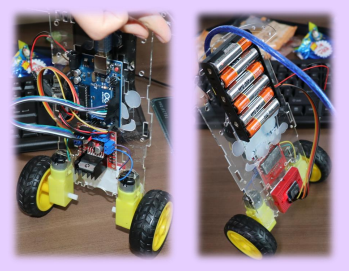
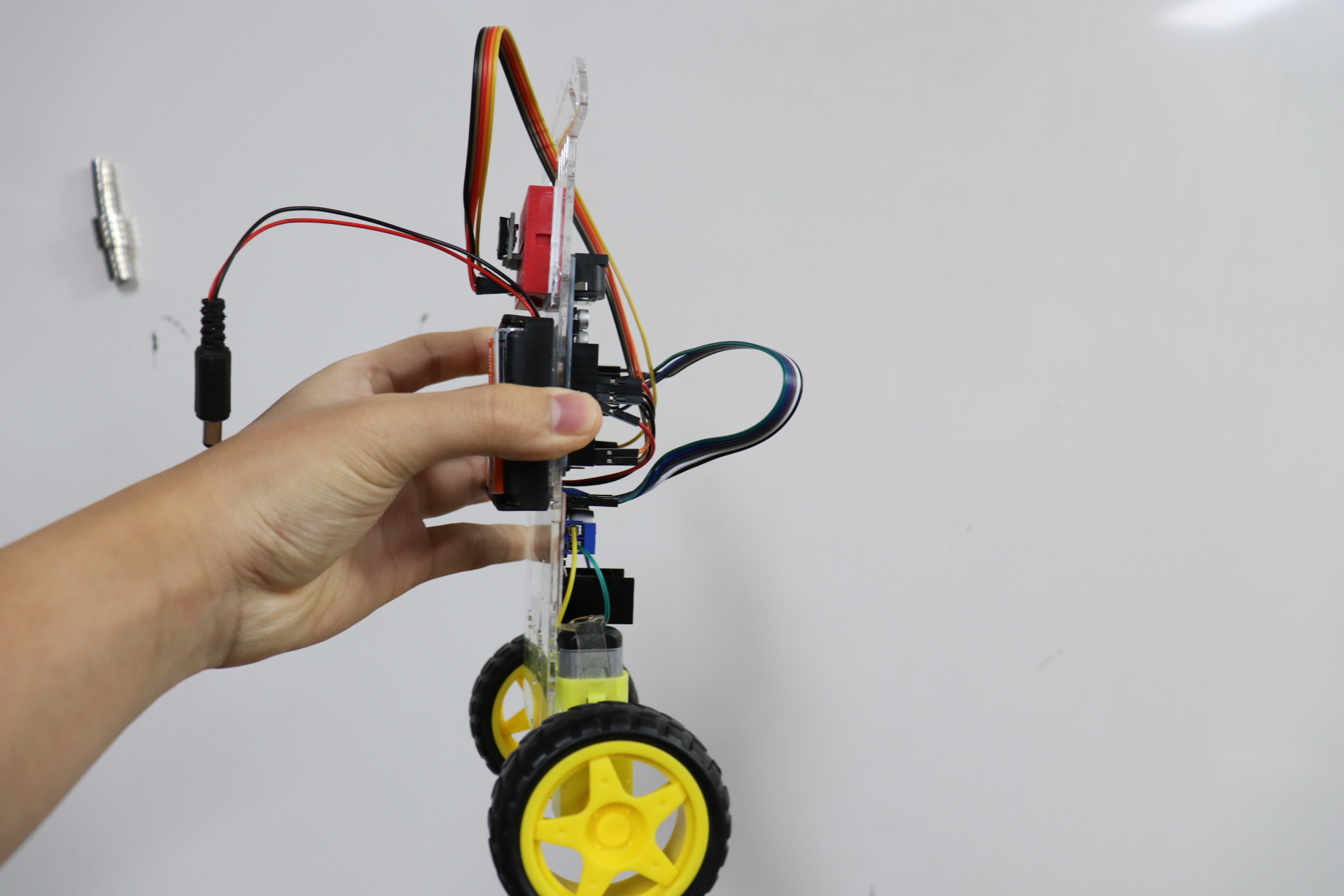
> 균형 잡기(22.06.12.)
직접 mpu6050에서 얻은 값을 토대로 짠 코드이다.
// 코드 설명 : 값을 기준으로 해서 움직임만 간단히 제어하기
// ① MPU 6050 에서 Z속도, X가속도, Y가속도 값을 받기
// ② AcZ <= 22000 일 때, 모터 가동에 대한 함수 실행
// ②-1 GyX < 600 && GyY < 50 => 모터 속도는 delta(GyY)값에 비례
// ②-2 GyX > 600 && GyY > 50 => 모터 속도는 delta(GyY)값에 비례

// -1*delta(GyY)*0.8 = output
// delta(GyY) = GyY(i) - GyY(f)

//----------libraries------------
#include<Wire.h>
#include <LMotorController.h>
#include "I2Cdev.h"
#include "MPU6050_6Axis_MotionApps20.h"

const int MPU=0x68;  //MPU 6050 의 I2C 기본 주소
int16_t AcX,AcY,AcZ,Tmp,GyX,GyY,GyZ;
int output;

void setup(){
  Wire.begin();      //Wire 라이브러리 초기화
  Wire.beginTransmission(MPU); //MPU로 데이터 전송 시작
  Wire.write(0x6B);  // PWR_MGMT_1 register
  Wire.write(0);     //MPU-6050 시작 모드로
  Wire.endTransmission(true);
  Serial.begin(115200);
  Serial.println("CLEARDATA");
  Serial.println("LABEL, AcX, AcY, AcZ, Tmp, GyX, GyY, GyZ");

  //모터 출력핀 초기화
  pinMode (6, OUTPUT);
  pinMode (9, OUTPUT);
  pinMode (10, OUTPUT);
  pinMode (11, OUTPUT);

  //모터 동작 OFF
  analogWrite(6,LOW);
  analogWrite(9,LOW);
  analogWrite(10,LOW);
  analogWrite(11,LOW);
}

void loop(){
  Wire.beginTransmission(MPU);    //데이터 전송시작
  Wire.write(0x3B);               // register 0x3B (ACCEL_XOUT_H), 큐에 데이터 기록
  Wire.endTransmission(false);    //연결유지
  Wire.requestFrom(MPU,14,true);  //MPU에 데이터 요청
  //데이터 한 바이트 씩 읽어서 반환
  AcX=Wire.read()<<8|Wire.read();
  AcY=Wire.read()<<8|Wire.read();
  AcZ=Wire.read()<<8|Wire.read();
  Tmp=Wire.read()<<8|Wire.read();
  GyX=Wire.read()<<8|Wire.read();
  GyY=Wire.read()<<8|Wire.read();
  GyZ=Wire.read()<<8|Wire.read();

  //시리얼 모니터에 출력
  Serial.print("DATA,");
  Serial.print(AcX);
  Serial.print(",");
  Serial.print(AcY);
  Serial.print(",");
  Serial.print(AcZ);
  Serial.print(",");
  Serial.print(Tmp);
  Serial.print(",");
  Serial.print(GyX);
  Serial.print(",");
  Serial.print(GyY);
  Serial.print(",");
  Serial.print(GyZ);
  Serial.println();
  delay(333);
}하지만, 제대로 작동하지 않았고, 한 블로그를 찾아서 그 블로그에 있는 코드를 실행하고 잘 작동함을 우선 확인하게 되었다.
/*
   arduino ==> 셀프밸런싱로봇을 만들어 실험해본 코드
 */
//------------------------------------------------------------
// PID 제어, 모터 제어, MPU6050센서 값을 받기 위한 선언문
#include <PID_v1.h>
#include <LMotorController.h>
#include "I2Cdev.h"
#include "MPU6050_6Axis_MotionApps20.h"

#if I2CDEV_IMPLEMENTATION == I2CDEV_ARDUINO_WIRE
    #include "Wire.h"
#endif


//------------------------------------------------------------
#define OUTPUT_TEAPOT 1                    // Processing을 통해 MPU6050 센서를 Visualize 하고 싶은 경우 1, 아니면 0으로 선언합니다
#define MIN_ABS_SPEED 30                  // 모터의 최저속도를 설정합니다.   0 ~ 255 값 중 선택
#define OUTPUT_READABLE_YAWPITCHROLL    // Yaw, Pitch, Roll 값을 얻기 위해 선언합니다
#define INTERRUPT_PIN 2                  // MPU6050 센서의 INT 핀이 꽂혀있는 번호를 설정합니다. 보통 2번
#define LED_PIN 13                         // Arudino Uno의 13번핀 LED를 동작 중에 반짝거리게 하려고 선언합니다


//------------------------------------------------------------
//MPU 객체를 선언합니다
MPU6050 mpu;
// MPU control/status vars
bool blinkState = false;    // LED를 반짝거리게 하기 위한 변수
bool dmpReady = false;        // set true if DMP init was successful
uint8_t mpuIntStatus;        // holds actual interrupt status byte from MPU
uint8_t devStatus;            // return status after each device operation (0 = success, !0 = error)
uint16_t packetSize;        // expected DMP packet size (default is 42 bytes)
uint16_t fifoCount;            // count of all bytes currently in FIFO
uint8_t fifoBuffer[64];        // FIFO storage buffer


//------------------------------------------------------------
// MPU6050 센서를 통해 쿼터니언과 오일러각, Yaw, Pitch, Roll 값을 얻기 위해 선언합니다
// orientation/motion vars
Quaternion q;           // [w, x, y, z]         quaternion container
VectorInt16 aa;         // [x, y, z]            accel sensor measurements
VectorInt16 aaReal;     // [x, y, z]            gravity-free accel sensor measurements
VectorInt16 aaWorld;    // [x, y, z]            world-frame accel sensor measurements
VectorFloat gravity;    // [x, y, z]            gravity vector
float euler[3];         // [psi, theta, phi]    Euler angle container
float ypr[3];           // [yaw, pitch, roll]   yaw/pitch/roll container and gravity vector


//------------------------------------------------------------
// Processing으로 MPU6050 센서를 Visualize 하기 위한 변수
// packet structure for InvenSense teapot demo
uint8_t teapotPacket[14] = { '$', 0x02, 0,0, 0,0, 0,0, 0,0, 0x00, 0x00, '\r', '\n' };


//------------------------------------------------------------
// PID 제어용 변수 선언
double kp = 60.;
double ki = 200.;
double kd = 1.5;


// 기울일 각도 선택
// 제가 만든 밸런싱로봇에는 184.0도가 가장 최적의 평형각도였습니다
// 각도가 180도를 기준으로 +-를 설정해주시면 됩니다
double originalSetpoint = 180;
double setpoint = originalSetpoint;
double movingAngleOffset = 0.3;

// PID 제어용 input, output 변수를 선언합니다
double input, output;

// PID값을 설정해준다
PID pid(&input, &output, &setpoint, kp, ki, kd, DIRECT);


// 모터 제어용 변수 선언
// EnA, EnB는 속도제어용(pwm), IN1,2,3,4는 방향제어용 핀입니다
int ENA = 10;
int IN1 = 12;
int IN2 = 6;
int IN3 = 9;
int IN4 = 8;
int ENB = 11;

// motorController 객체 생성, 맨 끝 파라미터 1,1은 각각 좌측, 우측모터의 최대속도(%) 입니다.
LMotorController motorController(ENA, IN1, IN2, ENB, IN3, IN4, 1, 1);


// ================================================================
// ===               INTERRUPT DETECTION ROUTINE                ===
// ================================================================
volatile bool mpuInterrupt = false;     // indicates whether MPU interrupt pin has gone high

void dmpDataReady() {
    mpuInterrupt = true;
}

void setup(){
    // join I2C bus (I2Cdev library doesn't do this automatically)
#if I2CDEV_IMPLEMENTATION == I2CDEV_ARDUINO_WIRE
    Wire.begin();
    Wire.setClock(400000); // 400kHz I2C clock. Comment this line if having compilation difficulties
#elif I2CDEV_IMPLEMENTATION == I2CDEV_BUILTIN_FASTWIRE
    Fastwire::setup(400, true);
#endif

    Serial.begin(115200);
    while (!Serial); // wait for Leonardo enumeration, others continue immediately

    // initialize device
    Serial.println(F("Initializing I2C devices..."));
    mpu.initialize();
    pinMode(INTERRUPT_PIN, INPUT);
    // verify connection
    Serial.println(F("Testing device connections..."));
    Serial.println(mpu.testConnection() ? F("MPU6050 connection successful") : F("MPU6050 connection failed"));

    // 키입력을 기다리는 코드. 주석처리했습니다
    // wait for ready
    //Serial.println(F("\nSend any character to begin DMP programming and demo: "));
    //while (Serial.available() && Serial.read()); // empty buffer
    //while (!Serial.available());                 // wait for data
    //while (Serial.available() && Serial.read()); // empty buffer again


    // load and configure the DMP
    Serial.println(F("Initializing DMP..."));
    devStatus = mpu.dmpInitialize();

    // supply your own gyro offsets here, scaled for min sensitivity
    mpu.setXGyroOffset(220);
    mpu.setYGyroOffset(76);
    mpu.setZGyroOffset(-85);
    mpu.setZAccelOffset(1788); // 1688 factory default for my test chip

    // devStatus 값이 0 이면 정상작동, 0이 아니면 오작동입니다
    // make sure it worked (returns 0 if so)
    if (devStatus == 0){
        // turn on the DMP, now that it's ready
        Serial.println(F("Enabling DMP..."));
        mpu.setDMPEnabled(true);

        // enable Arduino interrupt detection
        Serial.println(F("Enabling interrupt detection (Arduino external interrupt 0)..."));
        attachInterrupt(digitalPinToInterrupt(INTERRUPT_PIN), dmpDataReady, RISING);
        mpuIntStatus = mpu.getIntStatus();

        // set our DMP Ready flag so the main loop() function knows it's okay to use it
        Serial.println(F("DMP ready! Waiting for first interrupt..."));
        dmpReady = true;

        // get expected DMP packet size for later comparison
        packetSize = mpu.dmpGetFIFOPacketSize();


        // MPU6050 센서가 정삭작동하면 PID 제어용 코드를 초기화합니다
        pid.SetMode(AUTOMATIC);
        pid.SetSampleTime(10);
        pid.SetOutputLimits(-255, 255);
    }
    else{   // MPU6050 센서가 오작동한 경우
        // ERROR!
        // 1 = initial memory load failed
        // 2 = DMP configuration updates failed
        // (if it's going to break, usually the code will be 1)
        Serial.print(F("DMP Initialization failed (code "));
        Serial.print(devStatus);
        Serial.println(F(")"));
    }

    // 로봇이 작동 중 13번 LED를 깜빡거리기 위해 OUTPUT으로 초기화합니다
    pinMode(LED_PIN, OUTPUT);
}


void loop(){
    // if programming failed, don't try to do anything
    if (!dmpReady) return;

    // wait for MPU interrupt or extra packet(s) available
    while (!mpuInterrupt && fifoCount < packetSize){
        //no mpu data - performing PID calculations and output to motors

        pid.Compute(); // 루프를 돌면서 pid 값을 업데이트합니다
        motorController.move(output, MIN_ABS_SPEED); // pid 연산으로 나온 output 값을 motorController로 전송합니다. (모터제어)
    }

    // reset interrupt flag and get INT_STATUS byte
    mpuInterrupt = false;
    mpuIntStatus = mpu.getIntStatus();

    // get current FIFO count
    fifoCount = mpu.getFIFOCount();

    // MPU6050 센서가 정상작동하는 경우에만 PID제어를 해야하므로 아래와 같이 if-else문을 작성합니다
    // check for overflow (this should never happen unless our code is too inefficient)
    if ((mpuIntStatus & 0x10) || fifoCount == 1024){
        // reset so we can continue cleanly
        mpu.resetFIFO();
        Serial.println(F("FIFO overflow!"));
    }
    // MPU6050 센서가 정상작동하는 경우
    else if (mpuIntStatus & 0x02){
        // wait for correct available data length, should be a VERY short wait
        while (fifoCount < packetSize) fifoCount = mpu.getFIFOCount();

        // read a packet from FIFO
        mpu.getFIFOBytes(fifoBuffer, packetSize);

        // track FIFO count here in case there is > 1 packet available
        // (this lets us immediately read more without waiting for an interrupt)
        fifoCount -= packetSize;

        // display Euler angles in degrees
        mpu.dmpGetQuaternion(&q, fifoBuffer);
        mpu.dmpGetGravity(&gravity, &q);
        mpu.dmpGetYawPitchRoll(ypr, &q, &gravity);

#ifdef OUTPUT_READABLE_YAWPITCHROLL  // 센서를 통해 구한 Yaw, Pitch, Roll 값을 Serial Monitor에 표시합니다
        Serial.print("ypr\t");
        Serial.print(ypr[0] * 180/M_PI);
        Serial.print("\t");
        Serial.print(ypr[1] * 180/M_PI);
        Serial.print("\t");
        Serial.println(ypr[2] * 180/M_PI);
#endif
        // PID 제어를 하기 위해 input 변수에 Pitch 값을 넣습니다
        input = ypr[1] * 180/M_PI + 180;


#ifdef OUTPUT_TEAPOT  // Processing으로 MPU6050센서의 움직임을 Visualize 하기 위한 코드
        // display quaternion values in InvenSense Teapot demo format:
        teapotPacket[2] = fifoBuffer[0];
        teapotPacket[3] = fifoBuffer[1];
        teapotPacket[4] = fifoBuffer[4];
        teapotPacket[5] = fifoBuffer[5];
        teapotPacket[6] = fifoBuffer[8];
        teapotPacket[7] = fifoBuffer[9];
        teapotPacket[8] = fifoBuffer[12];
        teapotPacket[9] = fifoBuffer[13];
        Serial.write(teapotPacket, 14);
        teapotPacket[11]++; // packetCount, loops at 0xFF on purpose
#endif
    }
}
// [출처] [Arduino] 아두이노 Uno 활용 예제코드입니다(4) - Self Balancing Robot, 셀프밸런싱 로봇 만들기|작성자 edward0im이후 우리의 상황에 맞추어 다시 수정한 코드이다.
/*
   arduino ==> 셀프밸런싱로봇을 만들어 실험해본 코드
 */
//------------------------------------------------------------
// PID 제어, 모터 제어, MPU6050센서 값을 받기 위한 선언문
#include <PID_v1.h>
#include <LMotorController.h>
#include "I2Cdev.h"
#include "MPU6050_6Axis_MotionApps20.h"

#if I2CDEV_IMPLEMENTATION == I2CDEV_ARDUINO_WIRE
    #include "Wire.h"
#endif


//------------------------------------------------------------
#define OUTPUT_TEAPOT 1                    // Processing을 통해 MPU6050 센서를 Visualize 하고 싶은 경우 1, 아니면 0으로 선언합니다
#define MIN_ABS_SPEED 30                  // 모터의 최저속도를 설정합니다.   0 ~ 255 값 중 선택
#define OUTPUT_READABLE_YAWPITCHROLL    // Yaw, Pitch, Roll 값을 얻기 위해 선언합니다
#define INTERRUPT_PIN 2                  // MPU6050 센서의 INT 핀이 꽂혀있는 번호를 설정합니다. 보통 2번
#define LED_PIN 13                         // Arudino Uno의 13번핀 LED를 동작 중에 반짝거리게 하려고 선언합니다


//------------------------------------------------------------
//MPU 객체를 선언합니다
MPU6050 mpu;
// MPU control/status vars
bool blinkState = false;    // LED를 반짝거리게 하기 위한 변수
bool dmpReady = false;        // set true if DMP init was successful
uint8_t mpuIntStatus;        // holds actual interrupt status byte from MPU
uint8_t devStatus;            // return status after each device operation (0 = success, !0 = error)
uint16_t packetSize;        // expected DMP packet size (default is 42 bytes)
uint16_t fifoCount;            // count of all bytes currently in FIFO
uint8_t fifoBuffer[64];        // FIFO storage buffer


//------------------------------------------------------------
// MPU6050 센서를 통해 쿼터니언과 오일러각, Yaw, Pitch, Roll 값을 얻기 위해 선언합니다
// orientation/motion vars
Quaternion q;           // [w, x, y, z]         quaternion container
VectorInt16 aa;         // [x, y, z]            accel sensor measurements
VectorInt16 aaReal;     // [x, y, z]            gravity-free accel sensor measurements
VectorInt16 aaWorld;    // [x, y, z]            world-frame accel sensor measurements
VectorFloat gravity;    // [x, y, z]            gravity vector
float euler[3];         // [psi, theta, phi]    Euler angle container
float ypr[3];           // [yaw, pitch, roll]   yaw/pitch/roll container and gravity vector


//------------------------------------------------------------
// Processing으로 MPU6050 센서를 Visualize 하기 위한 변수
// packet structure for InvenSense teapot demo
uint8_t teapotPacket[14] = { '$', 0x02, 0,0, 0,0, 0,0, 0,0, 0x00, 0x00, '\r', '\n' };


//------------------------------------------------------------
// PID 제어용 변수 선언
double kp = 2;
double ki = 0.8;
double kd = 10;


// 기울일 각도 선택
// 제가 만든 밸런싱로봇에는 184.0도가 가장 최적의 평형각도였습니다
// 각도가 180도를 기준으로 +-를 설정해주시면 됩니다
double originalSetpoint = 270;
double setpoint = originalSetpoint;
double movingAngleOffset = 0.3;

// PID 제어용 input, output 변수를 선언합니다
double input, output;

// PID값을 설정해준다
PID pid(&input, &output, &setpoint, kp, ki, kd, DIRECT);


// 모터 제어용 변수 선언
// EnA, EnB는 속도제어용(pwm), IN1,2,3,4는 방향제어용 핀입니다
int ENA = 10;
int IN1 = 12;
int IN2 = 6;
int IN3 = 9;
int IN4 = 8;
int ENB = 11;

// motorController 객체 생성, 맨 끝 파라미터 1,1은 각각 좌측, 우측모터의 최대속도(%) 입니다.
LMotorController motorController(ENA, IN1, IN2, ENB, IN3, IN4, 1, 1);


// ================================================================
// ===               INTERRUPT DETECTION ROUTINE                ===
// ================================================================
volatile bool mpuInterrupt = false;     // indicates whether MPU interrupt pin has gone high

void dmpDataReady() {
    mpuInterrupt = true;
}

void setup(){
    // join I2C bus (I2Cdev library doesn't do this automatically)
#if I2CDEV_IMPLEMENTATION == I2CDEV_ARDUINO_WIRE
    Wire.begin();
    Wire.setClock(400000); // 400kHz I2C clock. Comment this line if having compilation difficulties
#elif I2CDEV_IMPLEMENTATION == I2CDEV_BUILTIN_FASTWIRE
    Fastwire::setup(400, true);
#endif

    Serial.begin(115200);
    while (!Serial); // wait for Leonardo enumeration, others continue immediately

    // initialize device
    Serial.println(F("Initializing I2C devices..."));
    mpu.initialize();
    pinMode(INTERRUPT_PIN, INPUT);
    // verify connection
    Serial.println(F("Testing device connections..."));
    Serial.println(mpu.testConnection() ? F("MPU6050 connection successful") : F("MPU6050 connection failed"));

    // 키입력을 기다리는 코드. 주석처리했습니다
    // wait for ready
    //Serial.println(F("\nSend any character to begin DMP programming and demo: "));
    //while (Serial.available() && Serial.read()); // empty buffer
    //while (!Serial.available());                 // wait for data
    //while (Serial.available() && Serial.read()); // empty buffer again


    // load and configure the DMP
    Serial.println(F("Initializing DMP..."));
    devStatus = mpu.dmpInitialize();

    // supply your own gyro offsets here, scaled for min sensitivity
    mpu.setXGyroOffset(220);
    mpu.setYGyroOffset(76);
    mpu.setZGyroOffset(-85);
    mpu.setZAccelOffset(1788); // 1688 factory default for my test chip

    // devStatus 값이 0 이면 정상작동, 0이 아니면 오작동입니다
    // make sure it worked (returns 0 if so)
    if (devStatus == 0){
        // turn on the DMP, now that it's ready
        Serial.println(F("Enabling DMP..."));
        mpu.setDMPEnabled(true);

        // enable Arduino interrupt detection
        Serial.println(F("Enabling interrupt detection (Arduino external interrupt 0)..."));
        attachInterrupt(digitalPinToInterrupt(INTERRUPT_PIN), dmpDataReady, RISING);
        mpuIntStatus = mpu.getIntStatus();

        // set our DMP Ready flag so the main loop() function knows it's okay to use it
        Serial.println(F("DMP ready! Waiting for first interrupt..."));
        dmpReady = true;

        // get expected DMP packet size for later comparison
        packetSize = mpu.dmpGetFIFOPacketSize();


        // MPU6050 센서가 정삭작동하면 PID 제어용 코드를 초기화합니다
        pid.SetMode(AUTOMATIC);
        pid.SetSampleTime(10);
        pid.SetOutputLimits(-255, 255);
    }
    else{   // MPU6050 센서가 오작동한 경우
        // ERROR!
        // 1 = initial memory load failed
        // 2 = DMP configuration updates failed
        // (if it's going to break, usually the code will be 1)
        Serial.print(F("DMP Initialization failed (code "));
        Serial.print(devStatus);
        Serial.println(F(")"));
    }

    // 로봇이 작동 중 13번 LED를 깜빡거리기 위해 OUTPUT으로 초기화합니다
    pinMode(LED_PIN, OUTPUT);
}


void loop(){
    // if programming failed, don't try to do anything
    if (!dmpReady) return;

    // wait for MPU interrupt or extra packet(s) available
    while (!mpuInterrupt && fifoCount < packetSize){
        //no mpu data - performing PID calculations and output to motors

        pid.Compute(); // 루프를 돌면서 pid 값을 업데이트합니다
        motorController.move(output, MIN_ABS_SPEED); // pid 연산으로 나온 output 값을 motorController로 전송합니다. (모터제어)
    }

    // reset interrupt flag and get INT_STATUS byte
    mpuInterrupt = false;
    mpuIntStatus = mpu.getIntStatus();

    // get current FIFO count
    fifoCount = mpu.getFIFOCount();

    // MPU6050 센서가 정상작동하는 경우에만 PID제어를 해야하므로 아래와 같이 if-else문을 작성합니다
    // check for overflow (this should never happen unless our code is too inefficient)
    if ((mpuIntStatus & 0x10) || fifoCount == 1024){
        // reset so we can continue cleanly
        mpu.resetFIFO();
        Serial.println(F("FIFO overflow!"));
    }
    // MPU6050 센서가 정상작동하는 경우
    else if (mpuIntStatus & 0x02){
        // wait for correct available data length, should be a VERY short wait
        while (fifoCount < packetSize) fifoCount = mpu.getFIFOCount();

        // read a packet from FIFO
        mpu.getFIFOBytes(fifoBuffer, packetSize);

        // track FIFO count here in case there is > 1 packet available
        // (this lets us immediately read more without waiting for an interrupt)
        fifoCount -= packetSize;

        // display Euler angles in degrees
        mpu.dmpGetQuaternion(&q, fifoBuffer);
        mpu.dmpGetGravity(&gravity, &q);
        mpu.dmpGetYawPitchRoll(ypr, &q, &gravity);

#ifdef OUTPUT_READABLE_YAWPITCHROLL  // 센서를 통해 구한 Yaw, Pitch, Roll 값을 Serial Monitor에 표시합니다
        Serial.print("ypr\t");
        Serial.print(ypr[0] * 180/M_PI);
        Serial.print("\t");
        Serial.print(ypr[1] * 180/M_PI);
        Serial.print("\t");
        Serial.println(ypr[2] * 180/M_PI);
#endif
        // PID 제어를 하기 위해 input 변수에 Pitch 값을 넣습니다
        input = ypr[1] * 180/M_PI + 180;


#ifdef OUTPUT_TEAPOT  // Processing으로 MPU6050센서의 움직임을 Visualize 하기 위한 코드
        // display quaternion values in InvenSense Teapot demo format:
        teapotPacket[2] = fifoBuffer[0];
        teapotPacket[3] = fifoBuffer[1];
        teapotPacket[4] = fifoBuffer[4];
        teapotPacket[5] = fifoBuffer[5];
        teapotPacket[6] = fifoBuffer[8];
        teapotPacket[7] = fifoBuffer[9];
        teapotPacket[8] = fifoBuffer[12];
        teapotPacket[9] = fifoBuffer[13];
        Serial.write(teapotPacket, 14);
        teapotPacket[11]++; // packetCount, loops at 0xFF on purpose
#endif
    }
}
// [출처] [Arduino] 아두이노 Uno 활용 예제코드입니다(4) - Self Balancing Robot, 셀프밸런싱 로봇 만들기|작성자 edward0im
> 균형 잡기(22.06.14.)
앞의 코드를 조금 수정하는 과정을 거쳤다.
/*
   arduino ==> 셀프밸런싱로봇을 만들어 실험해본 코드
 */
//------------------------------------------------------------
// PID 제어, 모터 제어, MPU6050센서 값을 받기 위한 선언문
#include <PID_v1.h>
#include <LMotorController.h>
#include "I2Cdev.h"
#include "MPU6050_6Axis_MotionApps20.h"

#if I2CDEV_IMPLEMENTATION == I2CDEV_ARDUINO_WIRE
    #include "Wire.h"
#endif


//------------------------------------------------------------
#define OUTPUT_TEAPOT 1                    // Processing을 통해 MPU6050 센서를 Visualize 하고 싶은 경우 1, 아니면 0으로 선언합니다
#define MIN_ABS_SPEED 30                  // 모터의 최저속도를 설정합니다.   0 ~ 255 값 중 선택
#define OUTPUT_READABLE_YAWPITCHROLL    // Yaw, Pitch, Roll 값을 얻기 위해 선언합니다
#define INTERRUPT_PIN 2                  // MPU6050 센서의 INT 핀이 꽂혀있는 번호를 설정합니다. 보통 2번
#define LED_PIN 13                         // Arudino Uno의 13번핀 LED를 동작 중에 반짝거리게 하려고 선언합니다


//------------------------------------------------------------
//MPU 객체를 선언합니다
MPU6050 mpu;
// MPU control/status vars
bool blinkState = false;    // LED를 반짝거리게 하기 위한 변수
bool dmpReady = false;        // set true if DMP init was successful
uint8_t mpuIntStatus;        // holds actual interrupt status byte from MPU
uint8_t devStatus;            // return status after each device operation (0 = success, !0 = error)
uint16_t packetSize;        // expected DMP packet size (default is 42 bytes)
uint16_t fifoCount;            // count of all bytes currently in FIFO
uint8_t fifoBuffer[64];        // FIFO storage buffer


//------------------------------------------------------------
// MPU6050 센서를 통해 쿼터니언과 오일러각, Yaw, Pitch, Roll 값을 얻기 위해 선언합니다
// orientation/motion vars
Quaternion q;           // [w, x, y, z]         quaternion container
VectorInt16 aa;         // [x, y, z]            accel sensor measurements
VectorInt16 aaReal;     // [x, y, z]            gravity-free accel sensor measurements
VectorInt16 aaWorld;    // [x, y, z]            world-frame accel sensor measurements
VectorFloat gravity;    // [x, y, z]            gravity vector
float euler[3];         // [psi, theta, phi]    Euler angle container
float ypr[3];           // [yaw, pitch, roll]   yaw/pitch/roll container and gravity vector


//------------------------------------------------------------
// Processing으로 MPU6050 센서를 Visualize 하기 위한 변수
// packet structure for InvenSense teapot demo
uint8_t teapotPacket[14] = { '$', 0x02, 0,0, 0,0, 0,0, 0,0, 0x00, 0x00, '\r', '\n' };


//------------------------------------------------------------
// PID 제어용 변수 선언
double kp = 2.8;
double ki = 0.5;
double kd = 15;


// 기울일 각도 선택
// 제가 만든 밸런싱로봇에는 184.0도가 가장 최적의 평형각도였습니다
// 각도가 180도를 기준으로 +-를 설정해주시면 됩니다
double originalSetpoint = 270;
double setpoint = originalSetpoint;
double movingAngleOffset = 0.3;

// PID 제어용 input, output 변수를 선언합니다
double input, output;

// PID값을 설정해준다
PID pid(&input, &output, &setpoint, kp, ki, kd, DIRECT);


// 모터 제어용 변수 선언
// EnA, EnB는 속도제어용(pwm), IN1,2,3,4는 방향제어용 핀입니다
int ENA = 10;
int IN1 = 12;
int IN2 = 6;
int IN3 = 9;
int IN4 = 8;
int ENB = 11;

// motorController 객체 생성, 맨 끝 파라미터 1,1은 각각 좌측, 우측모터의 최대속도(%) 입니다.
LMotorController motorController(ENA, IN1, IN2, ENB, IN3, IN4, 1, 1);


// ================================================================
// ===               INTERRUPT DETECTION ROUTINE                ===
// ================================================================
volatile bool mpuInterrupt = false;     // indicates whether MPU interrupt pin has gone high

void dmpDataReady() {
    mpuInterrupt = true;
}

void setup(){
    // join I2C bus (I2Cdev library doesn't do this automatically)
#if I2CDEV_IMPLEMENTATION == I2CDEV_ARDUINO_WIRE
    Wire.begin();
    Wire.setClock(400000); // 400kHz I2C clock. Comment this line if having compilation difficulties
#elif I2CDEV_IMPLEMENTATION == I2CDEV_BUILTIN_FASTWIRE
    Fastwire::setup(400, true);
#endif

    Serial.begin(115200);
    while (!Serial); // wait for Leonardo enumeration, others continue immediately

    // initialize device
    Serial.println(F("Initializing I2C devices..."));
    mpu.initialize();
    pinMode(INTERRUPT_PIN, INPUT);
    // verify connection
    Serial.println(F("Testing device connections..."));
    Serial.println(mpu.testConnection() ? F("MPU6050 connection successful") : F("MPU6050 connection failed"));

    // 키입력을 기다리는 코드. 주석처리했습니다
    // wait for ready
    //Serial.println(F("\nSend any character to begin DMP programming and demo: "));
    //while (Serial.available() && Serial.read()); // empty buffer
    //while (!Serial.available());                 // wait for data
    //while (Serial.available() && Serial.read()); // empty buffer again


    // load and configure the DMP
    Serial.println(F("Initializing DMP..."));
    devStatus = mpu.dmpInitialize();

    // supply your own gyro offsets here, scaled for min sensitivity
    mpu.setXGyroOffset(220);
    mpu.setYGyroOffset(76);
    mpu.setZGyroOffset(-85);
    mpu.setZAccelOffset(1788); // 1688 factory default for my test chip

    // devStatus 값이 0 이면 정상작동, 0이 아니면 오작동입니다
    // make sure it worked (returns 0 if so)
    if (devStatus == 0){
        // turn on the DMP, now that it's ready
        Serial.println(F("Enabling DMP..."));
        mpu.setDMPEnabled(true);

        // enable Arduino interrupt detection
        Serial.println(F("Enabling interrupt detection (Arduino external interrupt 0)..."));
        attachInterrupt(digitalPinToInterrupt(INTERRUPT_PIN), dmpDataReady, RISING);
        mpuIntStatus = mpu.getIntStatus();

        // set our DMP Ready flag so the main loop() function knows it's okay to use it
        Serial.println(F("DMP ready! Waiting for first interrupt..."));
        dmpReady = true;

        // get expected DMP packet size for later comparison
        packetSize = mpu.dmpGetFIFOPacketSize();


        // MPU6050 센서가 정삭작동하면 PID 제어용 코드를 초기화합니다
        pid.SetMode(AUTOMATIC);
        pid.SetSampleTime(10);
        pid.SetOutputLimits(-255, 255);
    }
    else{   // MPU6050 센서가 오작동한 경우
        // ERROR!
        // 1 = initial memory load failed
        // 2 = DMP configuration updates failed
        // (if it's going to break, usually the code will be 1)
        Serial.print(F("DMP Initialization failed (code "));
        Serial.print(devStatus);
        Serial.println(F(")"));
    }

    // 로봇이 작동 중 13번 LED를 깜빡거리기 위해 OUTPUT으로 초기화합니다
    pinMode(LED_PIN, OUTPUT);
}


void loop(){
    // if programming failed, don't try to do anything
    if (!dmpReady) return;

    // wait for MPU interrupt or extra packet(s) available
    while (!mpuInterrupt && fifoCount < packetSize){
        //no mpu data - performing PID calculations and output to motors

        pid.Compute(); // 루프를 돌면서 pid 값을 업데이트합니다
        motorController.move(output, MIN_ABS_SPEED); // pid 연산으로 나온 output 값을 motorController로 전송합니다. (모터제어)
    }

    // reset interrupt flag and get INT_STATUS byte
    mpuInterrupt = false;
    mpuIntStatus = mpu.getIntStatus();

    // get current FIFO count
    fifoCount = mpu.getFIFOCount();

    // MPU6050 센서가 정상작동하는 경우에만 PID제어를 해야하므로 아래와 같이 if-else문을 작성합니다
    // check for overflow (this should never happen unless our code is too inefficient)
    if ((mpuIntStatus & 0x10) || fifoCount == 1024){
        // reset so we can continue cleanly
        mpu.resetFIFO();
        Serial.println(F("FIFO overflow!"));
    }
    // MPU6050 센서가 정상작동하는 경우
    else if (mpuIntStatus & 0x02){
        // wait for correct available data length, should be a VERY short wait
        while (fifoCount < packetSize) fifoCount = mpu.getFIFOCount();

        // read a packet from FIFO
        mpu.getFIFOBytes(fifoBuffer, packetSize);

        // track FIFO count here in case there is > 1 packet available
        // (this lets us immediately read more without waiting for an interrupt)
        fifoCount -= packetSize;

        // display Euler angles in degrees
        mpu.dmpGetQuaternion(&q, fifoBuffer);
        mpu.dmpGetGravity(&gravity, &q);
        mpu.dmpGetYawPitchRoll(ypr, &q, &gravity);

#ifdef OUTPUT_READABLE_YAWPITCHROLL  // 센서를 통해 구한 Yaw, Pitch, Roll 값을 Serial Monitor에 표시합니다
        Serial.print("ypr\t");
        Serial.print(ypr[0] * 180/M_PI);
        Serial.print("\t");
        Serial.print(ypr[1] * 180/M_PI);
        Serial.print("\t");
        Serial.println(ypr[2] * 180/M_PI);
#endif
        // PID 제어를 하기 위해 input 변수에 Pitch 값을 넣습니다
        input = ypr[1] * 180/M_PI + 180;


#ifdef OUTPUT_TEAPOT  // Processing으로 MPU6050센서의 움직임을 Visualize 하기 위한 코드
        // display quaternion values in InvenSense Teapot demo format:
        teapotPacket[2] = fifoBuffer[0];
        teapotPacket[3] = fifoBuffer[1];
        teapotPacket[4] = fifoBuffer[4];
        teapotPacket[5] = fifoBuffer[5];
        teapotPacket[6] = fifoBuffer[8];
        teapotPacket[7] = fifoBuffer[9];
        teapotPacket[8] = fifoBuffer[12];
        teapotPacket[9] = fifoBuffer[13];
        Serial.write(teapotPacket, 14);
        teapotPacket[11]++; // packetCount, loops at 0xFF on purpose
#endif
    }
}
// [출처] [Arduino] 아두이노 Uno 활용 예제코드입니다(4) - Self Balancing Robot, 셀프밸런싱 로봇 만들기|작성자 edward0im이때 진행한 실험에 대한 영상들이다.
> 균형 잡기(22.06.16.)
이후 우리들에게 맞는 코드로 바꾸었다.
/*
코드 설명 : 값을 기준으로 해서 움직임만 간단히 제어하기
① MPU 6050 에서 Z속도, X가속도, Y가속도 값을 받기
② AcZ <= 22000 일 때, 모터 가동에 대한 함수 실행
  ②-1 GyX < 600 && GyY < 50 => 모터 속도는 delta(GyY)값에 비례
  ②-2 GyX > 600 && GyY > 50 => 모터 속도는 delta(GyY)값에 비례

  -1*delta(GyY)*0.8 = output
  delta(GyY) = GyY(i) - GyY(f)

*/

//----------libraries------------
#include <Wire.h>
#include <LMotorController.h>
#include "I2Cdev.h"
#include "MPU6050_6Axis_MotionApps20.h"
#include <PID_v1.h>


//------------------------------------------------------------
#define OUTPUT_TEAPOT 1                    // Processing을 통해 MPU6050 센서를 Visualize 하고 싶은 경우 1, 아니면 0으로 선언합니다
#define MIN_ABS_SPEED 30                  // 모터의 최저속도를 설정합니다.   0 ~ 255 값 중 선택
#define OUTPUT_READABLE_YAWPITCHROLL    // Yaw, Pitch, Roll 값을 얻기 위해 선언합니다
#define INTERRUPT_PIN 2                  // MPU6050 센서의 INT 핀이 꽂혀있는 번호를 설정합니다. 보통 2번
#define LED_PIN 13                         // Arudino Uno의 13번핀 LED를 동작 중에 반짝거리게 하려고 선언합니다


//------------------------------------------------------------
//MPU 객체를 선언합니다
MPU6050 mpu;
// MPU control/status vars
bool blinkState = false;    // LED를 반짝거리게 하기 위한 변수
bool dmpReady = false;        // set true if DMP init was successful
uint8_t mpuIntStatus;        // holds actual interrupt status byte from MPU
uint8_t devStatus;            // return status after each device operation (0 = success, !0 = error)
uint16_t packetSize;        // expected DMP packet size (default is 42 bytes)
uint16_t fifoCount;            // count of all bytes currently in FIFO
uint8_t fifoBuffer[64];        // FIFO storage buffer


//------------------------------------------------------------
// MPU6050 센서를 통해 쿼터니언과 오일러각, Yaw, Pitch, Roll 값을 얻기 위해 선언합니다
// orientation/motion vars
Quaternion q;           // [w, x, y, z]         quaternion container
VectorInt16 aa;         // [x, y, z]            accel sensor measurements
VectorInt16 aaReal;     // [x, y, z]            gravity-free accel sensor measurements
VectorInt16 aaWorld;    // [x, y, z]            world-frame accel sensor measurements
VectorFloat gravity;    // [x, y, z]            gravity vector
float euler[3];         // [psi, theta, phi]    Euler angle container
float ypr[3];           // [yaw, pitch, roll]   yaw/pitch/roll container and gravity vector


//------------------------------------------------------------
// Processing으로 MPU6050 센서를 Visualize 하기 위한 변수
// packet structure for InvenSense teapot demo
uint8_t teapotPacket[14] = { '$', 0x02, 0,0, 0,0, 0,0, 0,0, 0x00, 0x00, '\r', '\n' };


//------------------------------------------------------------
// PID 제어용 변수 선언
double kp = 2.8;
double ki = 0.5;
double kd = 15;


// 기울일 각도 선택
// 제가 만든 밸런싱로봇에는 184.0도가 가장 최적의 평형각도였습니다
// 각도가 180도를 기준으로 +-를 설정해주시면 됩니다
double originalSetpoint = 270;
double setpoint = originalSetpoint;
double movingAngleOffset = 0.3;

// PID 제어용 input, output 변수를 선언합니다
double input, output;

// PID값을 설정해준다
PID pid(&input, &output, &setpoint, kp, ki, kd, DIRECT);


// 모터 제어용 변수 선언
// EnA, EnB는 속도제어용(pwm), IN1,2,3,4는 방향제어용 핀입니다
int ENA = 10;
int IN1 = 12;
int IN2 = 6;
int IN3 = 9;
int IN4 = 8;
int ENB = 11;

// motorController 객체 생성, 맨 끝 파라미터 1,1은 각각 좌측, 우측모터의 최대속도(%) 입니다.
LMotorController motorController(ENA, IN1, IN2, ENB, IN3, IN4, 1, 1);


// ================================================================
// ===               INTERRUPT DETECTION ROUTINE                ===
// ================================================================
volatile bool mpuInterrupt = false;     // indicates whether MPU interrupt pin has gone high

void dmpDataReady() {
    mpuInterrupt = true;
}

void setup(){
  Wire.begin();      //Wire 라이브러리 초기화
  Wire.beginTransmission(MPU); //MPU로 데이터 전송 시작
  Wire.write(0x6B);  // PWR_MGMT_1 register
  Wire.write(0);     //MPU-6050 시작 모드로
  Wire.endTransmission(true);
  Serial.begin(115200);
  Serial.println("CLEARDATA");
  Serial.println("LABEL, AcX, AcY, AcZ, Tmp, GyX, GyY, GyZ");

  //모터 출력핀 초기화
  pinMode (6, OUTPUT);
  pinMode (9, OUTPUT);
  pinMode (10, OUTPUT);
  pinMode (11, OUTPUT);

  //모터 동작 OFF
  analogWrite(6,LOW);
  analogWrite(9,LOW);
  analogWrite(10,LOW);
  analogWrite(11,LOW);
}

void loop(){
  Wire.beginTransmission(MPU);    //데이터 전송시작
  Wire.write(0x3B);               // register 0x3B (ACCEL_XOUT_H), 큐에 데이터 기록
  Wire.endTransmission(false);    //연결유지
  Wire.requestFrom(MPU,14,true);  //MPU에 데이터 요청
  //데이터 한 바이트 씩 읽어서 반환
  AcX=Wire.read()<<8|Wire.read();
  AcY=Wire.read()<<8|Wire.read();
  AcZ=Wire.read()<<8|Wire.read();
  Tmp=Wire.read()<<8|Wire.read();
  GyX=Wire.read()<<8|Wire.read();
  GyY=Wire.read()<<8|Wire.read();
  GyZ=Wire.read()<<8|Wire.read();

  //시리얼 모니터에 출력
  Serial.print("DATA,");
  Serial.print(AcX);
  Serial.print(",");
  Serial.print(AcY);
  Serial.print(",");
  Serial.print(AcZ);
  Serial.print(",");
  Serial.print(Tmp);
  Serial.print(",");
  Serial.print(GyX);
  Serial.print(",");
  Serial.print(GyY);
  Serial.print(",");
  Serial.print(GyZ);
  Serial.println();
  delay(333);
}
- 줄줄이 3호
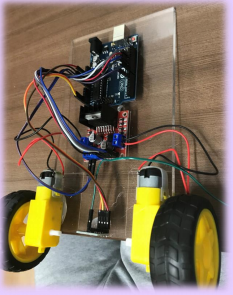
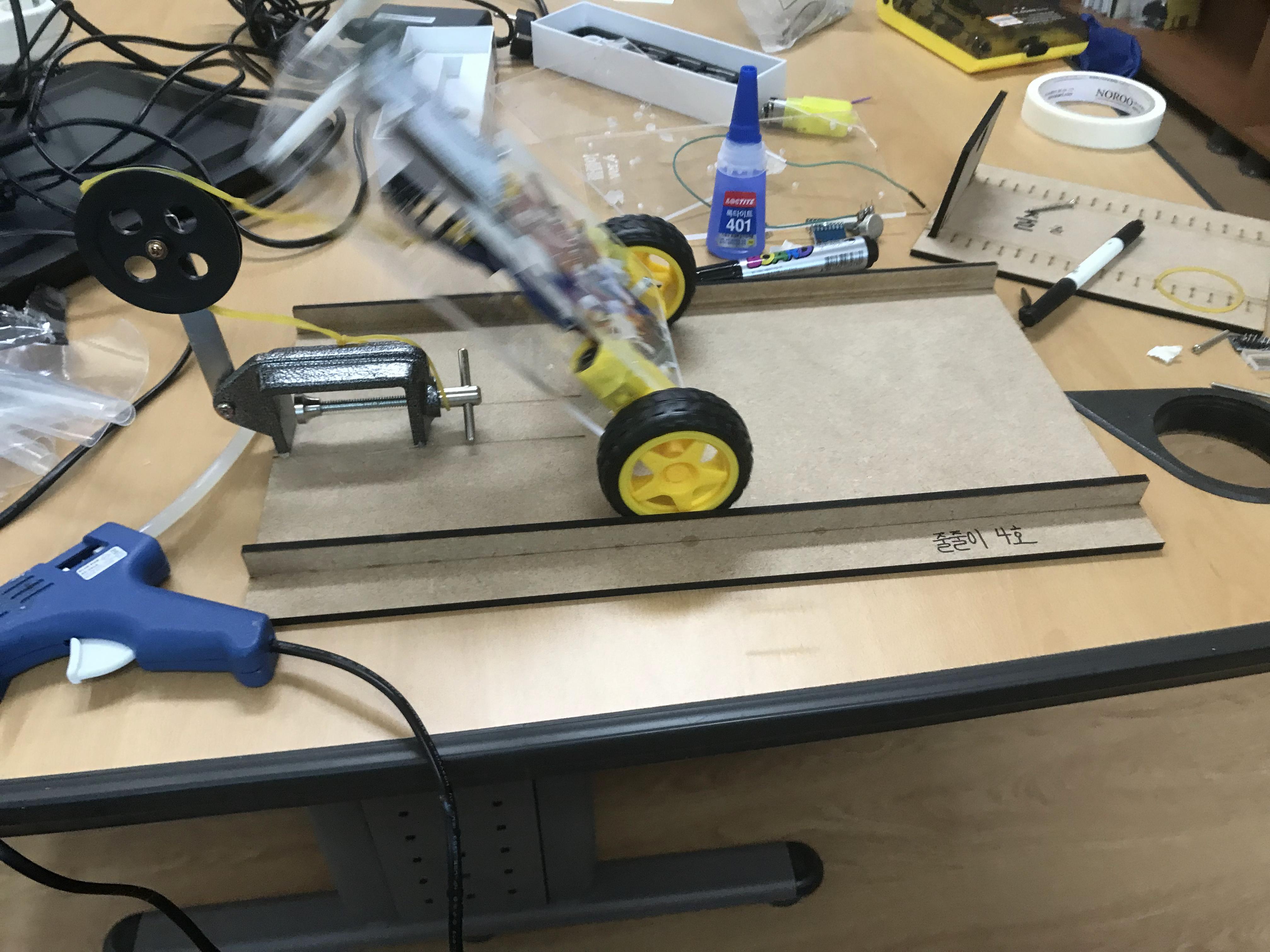
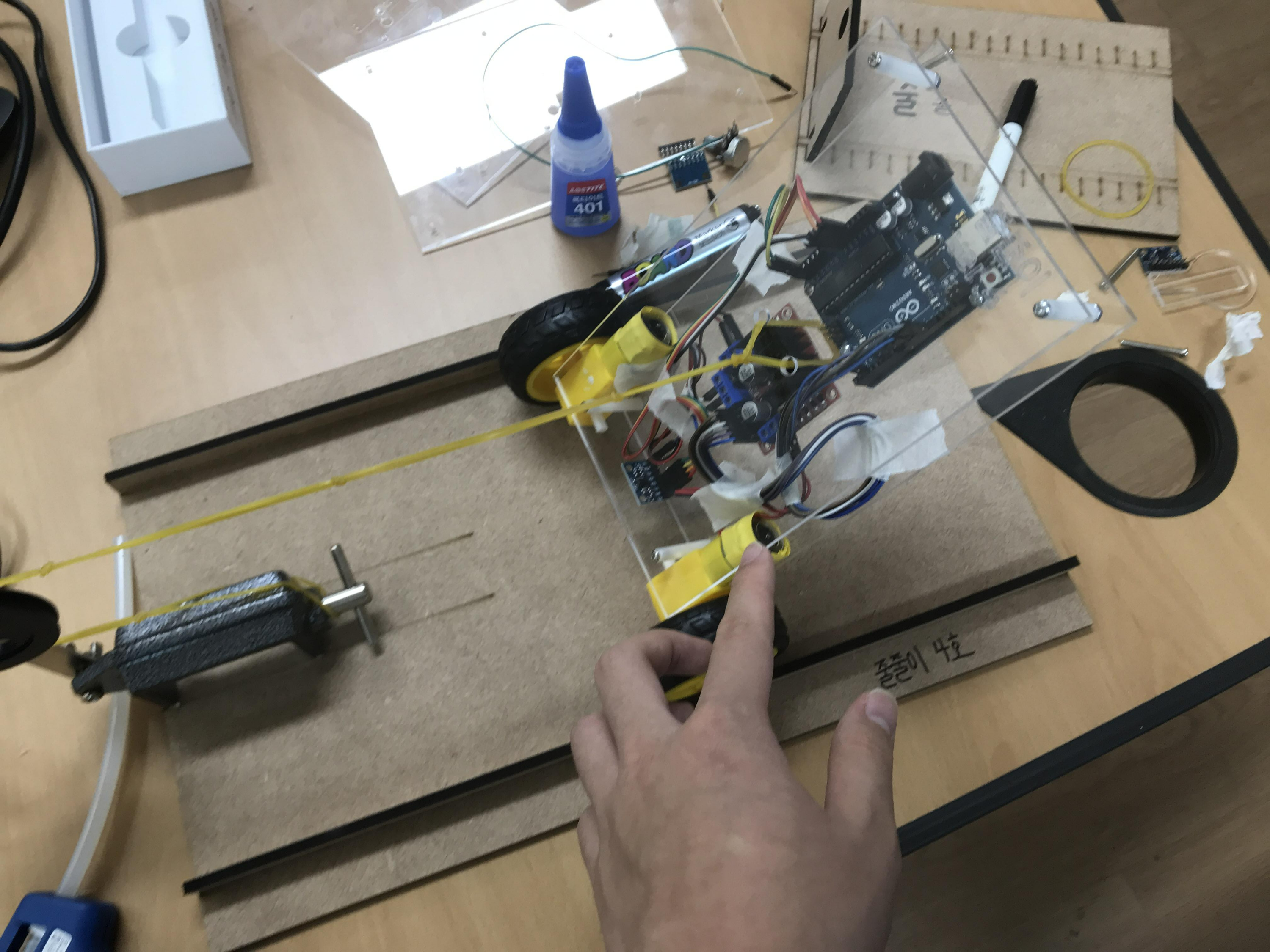
지금까지의 모습은 줄 묶기가 어려웠기 때문에 줄을 묶을 수 있는 위치를 설정하고, 부품의 위치를 고정화하여 무게 중심을 고정하였다.
> 균형 잡기(22.06.17.)
시리얼에서 렉이 걸리는 문제가 발생하여, 굳이 mpu의 값을 읽어서 보여주는 부분을 없앴다.
//   arduino ==> 셀프밸런싱로봇을 만들어 실험해본 코드

//------------------------------------------------------------
// PID 제어, 모터 제어, MPU6050센서 값을 받기 위한 선언문
#include <PID_v1.h>
#include <LMotorController.h>
#include "I2Cdev.h"
#include "MPU6050_6Axis_MotionApps20.h"

#if I2CDEV_IMPLEMENTATION == I2CDEV_ARDUINO_WIRE
    #include "Wire.h"
#endif


//------------------------------------------------------------
#define OUTPUT_TEAPOT 1                    // Processing을 통해 MPU6050 센서를 Visualize 하고 싶은 경우 1, 아니면 0으로 선언합니다
#define MIN_ABS_SPEED 30                  // 모터의 최저속도를 설정합니다.   0 ~ 255 값 중 선택
#define OUTPUT_READABLE_YAWPITCHROLL    // Yaw, Pitch, Roll 값을 얻기 위해 선언합니다
#define INTERRUPT_PIN 2                  // MPU6050 센서의 INT 핀이 꽂혀있는 번호를 설정합니다. 보통 2번
#define LED_PIN 13                         // Arudino Uno의 13번핀 LED를 동작 중에 반짝거리게 하려고 선언합니다


//------------------------------------------------------------
//MPU 객체를 선언합니다
MPU6050 mpu;
// MPU control/status vars
bool blinkState = false;    // LED를 반짝거리게 하기 위한 변수
bool dmpReady = false;        // set true if DMP init was successful
uint8_t mpuIntStatus;        // holds actual interrupt status byte from MPU
uint8_t devStatus;            // return status after each device operation (0 = success, !0 = error)
uint16_t packetSize;        // expected DMP packet size (default is 42 bytes)
uint16_t fifoCount;            // count of all bytes currently in FIFO
uint8_t fifoBuffer[64];        // FIFO storage buffer


//------------------------------------------------------------
// MPU6050 센서를 통해 쿼터니언과 오일러각, Yaw, Pitch, Roll 값을 얻기 위해 선언합니다
// orientation/motion vars
Quaternion q;           // [w, x, y, z]         quaternion container
VectorInt16 aa;         // [x, y, z]            accel sensor measurements
VectorInt16 aaReal;     // [x, y, z]            gravity-free accel sensor measurements
VectorInt16 aaWorld;    // [x, y, z]            world-frame accel sensor measurements
VectorFloat gravity;    // [x, y, z]            gravity vector
float euler[3];         // [psi, theta, phi]    Euler angle container
float ypr[3];           // [yaw, pitch, roll]   yaw/pitch/roll container and gravity vector


//------------------------------------------------------------
// Processing으로 MPU6050 센서를 Visualize 하기 위한 변수
// packet structure for InvenSense teapot demo
uint8_t teapotPacket[14] = { '$', 0x02, 0,0, 0,0, 0,0, 0,0, 0x00, 0x00, '\r', '\n' };


//------------------------------------------------------------
// PID 제어용 변수 선언
double kp = 2.8;
double ki = 0.5;
double kd = 15;


// 기울일 각도 선택
// 제가 만든 밸런싱로봇에는 184.0도가 가장 최적의 평형각도였습니다
// 각도가 180도를 기준으로 +-를 설정해주시면 됩니다
double originalSetpoint = 273;
double setpoint = originalSetpoint;
double movingAngleOffset = 0.3;

// PID 제어용 input, output 변수를 선언합니다
double input, output;

// PID값을 설정해준다
PID pid(&input, &output, &setpoint, kp, ki, kd, DIRECT);


// 모터 제어용 변수 선언
// EnA, EnB는 속도제어용(pwm), IN1,2,3,4는 방향제어용 핀입니다
int ENA = 10;
int IN1 = 12;
int IN2 = 6;
int IN3 = 9;
int IN4 = 8;
int ENB = 11;

// motorController 객체 생성, 맨 끝 파라미터 1,1은 각각 좌측, 우측모터의 최대속도(%) 입니다.
LMotorController motorController(ENA, IN1, IN2, ENB, IN3, IN4, 1, 1);


// ================================================================
// ===               INTERRUPT DETECTION ROUTINE                ===
// ================================================================
volatile bool mpuInterrupt = false;     // indicates whether MPU interrupt pin has gone high

void dmpDataReady() {
    mpuInterrupt = true;
}

void setup(){
    // join I2C bus (I2Cdev library doesn't do this automatically)
#if I2CDEV_IMPLEMENTATION == I2CDEV_ARDUINO_WIRE
    Wire.begin();
    Wire.setClock(400000); // 400kHz I2C clock. Comment this line if having compilation difficulties
#elif I2CDEV_IMPLEMENTATION == I2CDEV_BUILTIN_FASTWIRE
    Fastwire::setup(400, true);
#endif

    Serial.begin(115200);
    while (!Serial); // wait for Leonardo enumeration, others continue immediately

    // initialize device
    Serial.println(F("Initializing I2C devices..."));
    mpu.initialize();
    pinMode(INTERRUPT_PIN, INPUT);
    // verify connection
    Serial.println(F("Testing device connections..."));
    Serial.println(mpu.testConnection() ? F("MPU6050 connection successful") : F("MPU6050 connection failed"));

    // 키입력을 기다리는 코드. 주석처리했습니다
    // wait for ready
    //Serial.println(F("\nSend any character to begin DMP programming and demo: "));
    //while (Serial.available() && Serial.read()); // empty buffer
    //while (!Serial.available());                 // wait for data
    //while (Serial.available() && Serial.read()); // empty buffer again


    // load and configure the DMP
    Serial.println(F("Initializing DMP..."));
    devStatus = mpu.dmpInitialize();

    // supply your own gyro offsets here, scaled for min sensitivity
    mpu.setXGyroOffset(220);
    mpu.setYGyroOffset(76);
    mpu.setZGyroOffset(-85);
    mpu.setZAccelOffset(1788); // 1688 factory default for my test chip

    // devStatus 값이 0 이면 정상작동, 0이 아니면 오작동입니다
    // make sure it worked (returns 0 if so)
    if (devStatus == 0){
        // turn on the DMP, now that it's ready
        Serial.println(F("Enabling DMP..."));
        mpu.setDMPEnabled(true);

        // enable Arduino interrupt detection
        Serial.println(F("Enabling interrupt detection (Arduino external interrupt 0)..."));
        attachInterrupt(digitalPinToInterrupt(INTERRUPT_PIN), dmpDataReady, RISING);
        mpuIntStatus = mpu.getIntStatus();

        // set our DMP Ready flag so the main loop() function knows it's okay to use it
        Serial.println(F("DMP ready! Waiting for first interrupt..."));
        dmpReady = true;

        // get expected DMP packet size for later comparison
        packetSize = mpu.dmpGetFIFOPacketSize();


        // MPU6050 센서가 정삭작동하면 PID 제어용 코드를 초기화합니다
        pid.SetMode(AUTOMATIC);
        pid.SetSampleTime(10);
        pid.SetOutputLimits(-255, 255);
    }
    else{   // MPU6050 센서가 오작동한 경우
        // ERROR!
        // 1 = initial memory load failed
        // 2 = DMP configuration updates failed
        // (if it's going to break, usually the code will be 1)
        Serial.print(F("DMP Initialization failed (code "));
        Serial.print(devStatus);
        Serial.println(F(")"));
    }

    // 로봇이 작동 중 13번 LED를 깜빡거리기 위해 OUTPUT으로 초기화합니다
    pinMode(LED_PIN, OUTPUT);
}


void loop(){
    // if programming failed, don't try to do anything
    if (!dmpReady) return;

    // wait for MPU interrupt or extra packet(s) available
    while (!mpuInterrupt && fifoCount < packetSize){
        //no mpu data - performing PID calculations and output to motors

        pid.Compute(); // 루프를 돌면서 pid 값을 업데이트합니다
        motorController.move(output, MIN_ABS_SPEED); // pid 연산으로 나온 output 값을 motorController로 전송합니다. (모터제어)
    }

    // reset interrupt flag and get INT_STATUS byte
    mpuInterrupt = false;
    mpuIntStatus = mpu.getIntStatus();

    // get current FIFO count
    fifoCount = mpu.getFIFOCount();

    // MPU6050 센서가 정상작동하는 경우에만 PID제어를 해야하므로 아래와 같이 if-else문을 작성합니다
    // check for overflow (this should never happen unless our code is too inefficient)
    if ((mpuIntStatus & 0x10) || fifoCount == 1024){
        // reset so we can continue cleanly
        mpu.resetFIFO();
        Serial.println(F("FIFO overflow!"));
    }
    // MPU6050 센서가 정상작동하는 경우
    else if (mpuIntStatus & 0x02){
        // wait for correct available data length, should be a VERY short wait
        while (fifoCount < packetSize) fifoCount = mpu.getFIFOCount();

        // read a packet from FIFO
        mpu.getFIFOBytes(fifoBuffer, packetSize);

        // track FIFO count here in case there is > 1 packet available
        // (this lets us immediately read more without waiting for an interrupt)
        fifoCount -= packetSize;

        // display Euler angles in degrees
        mpu.dmpGetQuaternion(&q, fifoBuffer);
        mpu.dmpGetGravity(&gravity, &q);
        mpu.dmpGetYawPitchRoll(ypr, &q, &gravity);

#ifdef OUTPUT_READABLE_YAWPITCHROLL  // 센서를 통해 구한 Yaw, Pitch, Roll 값을 Serial Monitor에 표시합니다
        Serial.print("ypr\t");
        Serial.print(ypr[0] * 180/M_PI);
        Serial.print("\t");
        Serial.print(ypr[1] * 180/M_PI);
        Serial.print("\t");
        Serial.println(ypr[2] * 180/M_PI);
#endif
        // PID 제어를 하기 위해 input 변수에 Pitch 값을 넣습니다
        input = ypr[1] * 180/M_PI + 180;


#ifdef OUTPUT_TEAPOT  // Processing으로 MPU6050센서의 움직임을 Visualize 하기 위한 코드
        // display quaternion values in InvenSense Teapot demo format:
        teapotPacket[2] = fifoBuffer[0];
        teapotPacket[3] = fifoBuffer[1];
        teapotPacket[4] = fifoBuffer[4];
        teapotPacket[5] = fifoBuffer[5];
        teapotPacket[6] = fifoBuffer[8];
        teapotPacket[7] = fifoBuffer[9];
        teapotPacket[8] = fifoBuffer[12];
        teapotPacket[9] = fifoBuffer[13];
        Serial.write(teapotPacket, 14);
        teapotPacket[11]++; // packetCount, loops at 0xFF on purpose
#endif
    }
}
// [출처] [Arduino] 아두이노 Uno 활용 예제코드입니다(4) - Self Balancing Robot, 셀프밸런싱 로봇 만들기|작성자 edward0im
- 줄줄이 4호
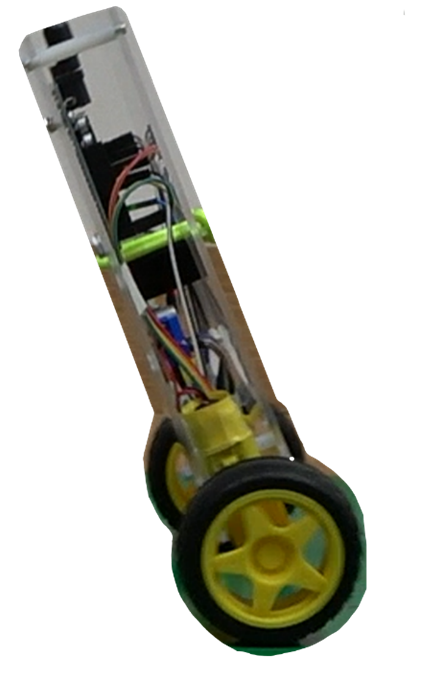
줄줄이 3호는 내구도가 부족하여 실험 중에 굉장히 불안정하여서 내구도를 개선하기 위해서 볼트, 너트 체결을 통해 글루건을 통한 부착보다 열로 인한 부품 훼손을 막았다.
> PID 잡기(22.07.17.)
//   arduino ==> 셀프밸런싱로봇을 만들어 실험해본 코드

//------------------------------------------------------------
// PID 제어, 모터 제어, MPU6050센서 값을 받기 위한 선언문
#include <PID_v1.h>
#include <LMotorController.h>
#include "I2Cdev.h"
#include "MPU6050_6Axis_MotionApps20.h"

#if I2CDEV_IMPLEMENTATION == I2CDEV_ARDUINO_WIRE
    #include "Wire.h"
#endif


//------------------------------------------------------------
#define OUTPUT_TEAPOT 1                    // Processing을 통해 MPU6050 센서를 Visualize 하고 싶은 경우 1, 아니면 0으로 선언합니다
#define MIN_ABS_SPEED 30                  // 모터의 최저속도를 설정합니다.   0 ~ 255 값 중 선택
#define OUTPUT_READABLE_YAWPITCHROLL    // Yaw, Pitch, Roll 값을 얻기 위해 선언합니다
#define INTERRUPT_PIN 2                  // MPU6050 센서의 INT 핀이 꽂혀있는 번호를 설정합니다. 보통 2번
#define LED_PIN 13                         // Arudino Uno의 13번핀 LED를 동작 중에 반짝거리게 하려고 선언합니다


//------------------------------------------------------------
//MPU 객체를 선언합니다
MPU6050 mpu;
// MPU control/status vars
bool blinkState = false;    // LED를 반짝거리게 하기 위한 변수
bool dmpReady = false;        // set true if DMP init was successful
uint8_t mpuIntStatus;        // holds actual interrupt status byte from MPU
uint8_t devStatus;            // return status after each device operation (0 = success, !0 = error)
uint16_t packetSize;        // expected DMP packet size (default is 42 bytes)
uint16_t fifoCount;            // count of all bytes currently in FIFO
uint8_t fifoBuffer[64];        // FIFO storage buffer


//------------------------------------------------------------
// MPU6050 센서를 통해 쿼터니언과 오일러각, Yaw, Pitch, Roll 값을 얻기 위해 선언합니다
// orientation/motion vars
Quaternion q;           // [w, x, y, z]         quaternion container
VectorInt16 aa;         // [x, y, z]            accel sensor measurements
VectorInt16 aaReal;     // [x, y, z]            gravity-free accel sensor measurements
VectorInt16 aaWorld;    // [x, y, z]            world-frame accel sensor measurements
VectorFloat gravity;    // [x, y, z]            gravity vector
float euler[3];         // [psi, theta, phi]    Euler angle container
float ypr[3];           // [yaw, pitch, roll]   yaw/pitch/roll container and gravity vector


//------------------------------------------------------------
// Processing으로 MPU6050 센서를 Visualize 하기 위한 변수
// packet structure for InvenSense teapot demo
uint8_t teapotPacket[14] = { '$', 0x02, 0,0, 0,0, 0,0, 0,0, 0x00, 0x00, '\r', '\n' };


//------------------------------------------------------------
// PID 제어용 변수 선언
double kp = 40;
double ki = 100;
double kd = 0.8;


// 기울일 각도 선택
// 제가 만든 밸런싱로봇에는 184.0도가 가장 최적의 평형각도였습니다
// 각도가 180도를 기준으로 +-를 설정해주시면 됩니다
double originalSetpoint = 207;
double setpoint = originalSetpoint;
double movingAngleOffset = 0.3;

// PID 제어용 input, output 변수를 선언합니다
double input, output;

// PID값을 설정해준다
PID pid(&input, &output, &setpoint, kp, ki, kd, DIRECT);


// 모터 제어용 변수 선언
// EnA, EnB는 속도제어용(pwm), IN1,2,3,4는 방향제어용 핀입니다
int ENA = 10;
int IN1 = 12;
int IN2 = 6;
int IN3 = 9;
int IN4 = 8;
int ENB = 11;

// motorController 객체 생성, 맨 끝 파라미터 1,1은 각각 좌측, 우측모터의 최대속도(%) 입니다.
LMotorController motorController(ENA, IN2, IN1, ENB, IN4, IN3, 1, 1);


// ================================================================
// ===               INTERRUPT DETECTION ROUTINE                ===
// ================================================================
volatile bool mpuInterrupt = false;     // indicates whether MPU interrupt pin has gone high

void dmpDataReady() {
    mpuInterrupt = true;
}

void setup(){
    // join I2C bus (I2Cdev library doesn't do this automatically)
#if I2CDEV_IMPLEMENTATION == I2CDEV_ARDUINO_WIRE
    Wire.begin();
    Wire.setClock(400000); // 400kHz I2C clock. Comment this line if having compilation difficulties
#elif I2CDEV_IMPLEMENTATION == I2CDEV_BUILTIN_FASTWIRE
    Fastwire::setup(400, true);
#endif

    Serial.begin(115200);
    while (!Serial); // wait for Leonardo enumeration, others continue immediately

    // initialize device
    Serial.println(F("Initializing I2C devices..."));
    mpu.initialize();
    pinMode(INTERRUPT_PIN, INPUT);
    // verify connection
    Serial.println(F("Testing device connections..."));
    Serial.println(mpu.testConnection() ? F("MPU6050 connection successful") : F("MPU6050 connection failed"));

    // 키입력을 기다리는 코드. 주석처리했습니다
    // wait for ready
    //Serial.println(F("\nSend any character to begin DMP programming and demo: "));
    //while (Serial.available() && Serial.read()); // empty buffer
    //while (!Serial.available());                 // wait for data
    //while (Serial.available() && Serial.read()); // empty buffer again


    // load and configure the DMP
    Serial.println(F("Initializing DMP..."));
    devStatus = mpu.dmpInitialize();

    // supply your own gyro offsets here, scaled for min sensitivity
    mpu.setXGyroOffset(220);
    mpu.setYGyroOffset(76);
    mpu.setZGyroOffset(-85);
    mpu.setZAccelOffset(1788); // 1688 factory default for my test chip

    // devStatus 값이 0 이면 정상작동, 0이 아니면 오작동입니다
    // make sure it worked (returns 0 if so)
    if (devStatus == 0){
        // turn on the DMP, now that it's ready
        Serial.println(F("Enabling DMP..."));
        mpu.setDMPEnabled(true);

        // enable Arduino interrupt detection
        Serial.println(F("Enabling interrupt detection (Arduino external interrupt 0)..."));
        attachInterrupt(digitalPinToInterrupt(INTERRUPT_PIN), dmpDataReady, RISING);
        mpuIntStatus = mpu.getIntStatus();

        // set our DMP Ready flag so the main loop() function knows it's okay to use it
        Serial.println(F("DMP ready! Waiting for first interrupt..."));
        dmpReady = true;

        // get expected DMP packet size for later comparison
        packetSize = mpu.dmpGetFIFOPacketSize();


        // MPU6050 센서가 정삭작동하면 PID 제어용 코드를 초기화합니다
        pid.SetMode(AUTOMATIC);
        pid.SetSampleTime(10);
        pid.SetOutputLimits(-255, 255);
    }
    else{   // MPU6050 센서가 오작동한 경우
        // ERROR!
        // 1 = initial memory load failed
        // 2 = DMP configuration updates failed
        // (if it's going to break, usually the code will be 1)
        Serial.print(F("DMP Initialization failed (code "));
        Serial.print(devStatus);
        Serial.println(F(")"));
    }

    // 로봇이 작동 중 13번 LED를 깜빡거리기 위해 OUTPUT으로 초기화합니다
    pinMode(LED_PIN, OUTPUT);
}


void loop(){
    // if programming failed, don't try to do anything
    if (!dmpReady) return;

    // wait for MPU interrupt or extra packet(s) available
    while (!mpuInterrupt && fifoCount < packetSize){
        //no mpu data - performing PID calculations and output to motors

        pid.Compute(); // 루프를 돌면서 pid 값을 업데이트합니다
        motorController.move(output, MIN_ABS_SPEED); // pid 연산으로 나온 output 값을 motorController로 전송합니다. (모터제어)
    }

    // reset interrupt flag and get INT_STATUS byte
    mpuInterrupt = false;
    mpuIntStatus = mpu.getIntStatus();

    // get current FIFO count
    fifoCount = mpu.getFIFOCount();

    // MPU6050 센서가 정상작동하는 경우에만 PID제어를 해야하므로 아래와 같이 if-else문을 작성합니다
    // check for overflow (this should never happen unless our code is too inefficient)
    if ((mpuIntStatus & 0x10) || fifoCount == 1024){
        // reset so we can continue cleanly
        mpu.resetFIFO();
        Serial.println(F("FIFO overflow!"));
    }
    // MPU6050 센서가 정상작동하는 경우
    else if (mpuIntStatus & 0x02){
        // wait for correct available data length, should be a VERY short wait
        while (fifoCount < packetSize) fifoCount = mpu.getFIFOCount();

        // read a packet from FIFO
        mpu.getFIFOBytes(fifoBuffer, packetSize);

        // track FIFO count here in case there is > 1 packet available
        // (this lets us immediately read more without waiting for an interrupt)
        fifoCount -= packetSize;

        // display Euler angles in degrees
        mpu.dmpGetQuaternion(&q, fifoBuffer);
        mpu.dmpGetGravity(&gravity, &q);
        mpu.dmpGetYawPitchRoll(ypr, &q, &gravity);

#ifdef OUTPUT_READABLE_YAWPITCHROLL  // 센서를 통해 구한 Yaw, Pitch, Roll 값을 Serial Monitor에 표시합니다
        Serial.print("ypr\t");
        Serial.print(ypr[0] * 180/M_PI);
        Serial.print("\t");
        Serial.print(ypr[1] * 180/M_PI);
        Serial.print("\t");
        Serial.println(ypr[2] * 180/M_PI);
#endif
        // PID 제어를 하기 위해 input 변수에 Pitch 값을 넣습니다
        input = ypr[1] * 180/M_PI + 180;


#ifdef OUTPUT_TEAPOT  // Processing으로 MPU6050센서의 움직임을 Visualize 하기 위한 코드
        // display quaternion values in InvenSense Teapot demo format:
        teapotPacket[2] = fifoBuffer[0];
        teapotPacket[3] = fifoBuffer[1];
        teapotPacket[4] = fifoBuffer[4];
        teapotPacket[5] = fifoBuffer[5];
        teapotPacket[6] = fifoBuffer[8];
        teapotPacket[7] = fifoBuffer[9];
        teapotPacket[8] = fifoBuffer[12];
        teapotPacket[9] = fifoBuffer[13];
        Serial.write(teapotPacket, 14);
        teapotPacket[11]++; // packetCount, loops at 0xFF on purpose
#endif
    }
}
// [출처] [Arduino] 아두이노 Uno 활용 예제코드입니다(4) - Self Balancing Robot, 셀프밸런싱 로봇 만들기|작성자 edward0im줄줄이 4호의 수직을 유지하는 모습이다.
또한 자세를 유지하는 모습이다.
이렇게 로봇을 다 만들고, 이제 발표를 하기 위해 준비를 진행했다.
'탐구 💾 > 2022 탐구 이야기' 카테고리의 다른 글
| [22‘ 전람회] 전국과학전람회(1) - PID 이야기 (0) | 2023.03.07 |
|---|---|
| [22' 전람회] 충북과학전람회 (5) - 발표 및 결과 (0) | 2023.03.03 |
| [22' 전람회] 충북과학전람회 (3) - 줄다리기를 로봇으로 구현하자 (1) (0) | 2023.03.03 |
| [22' 전람회] 충북과학전람회 (2) - 줄다리기를 역학적으로 알아보자 (0) | 2023.03.01 |
| [22' 전람회] 충북과학전람회 (1) - 다시 한번 시작하다, (0) | 2023.03.01 |
